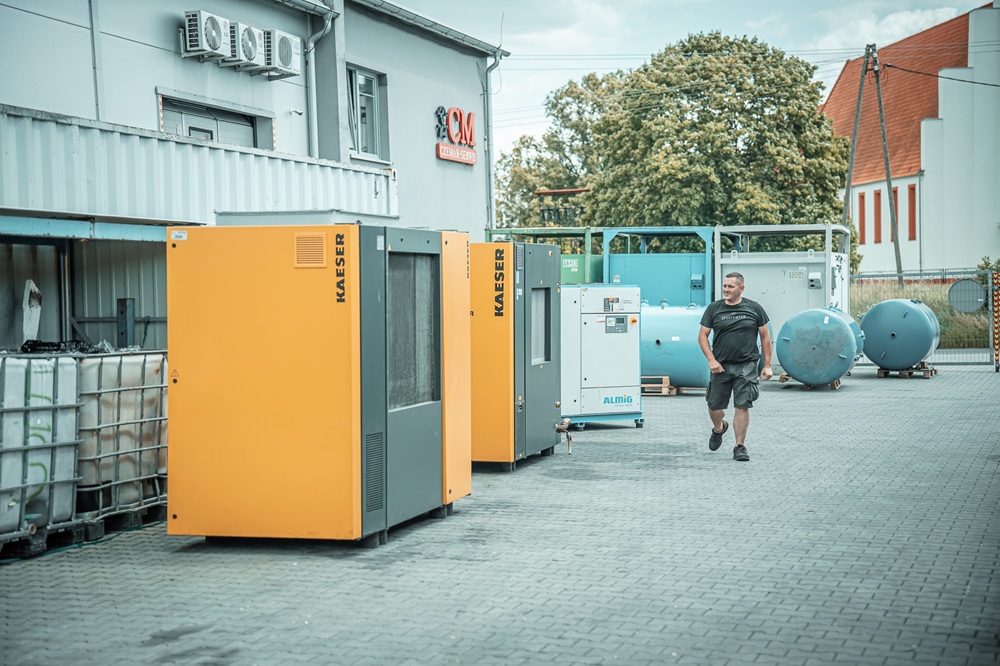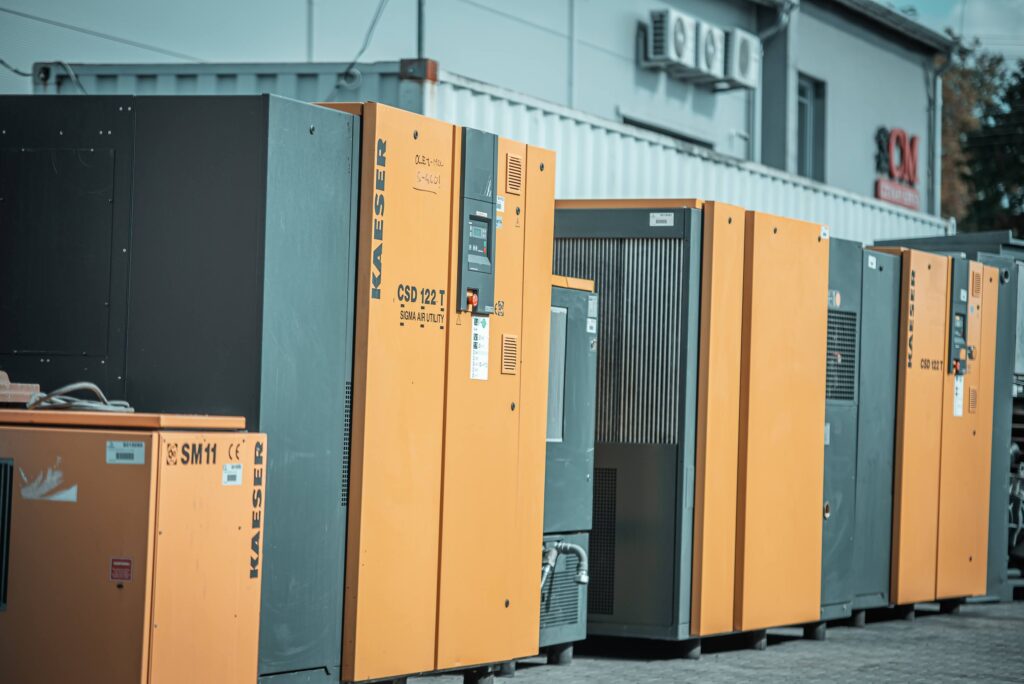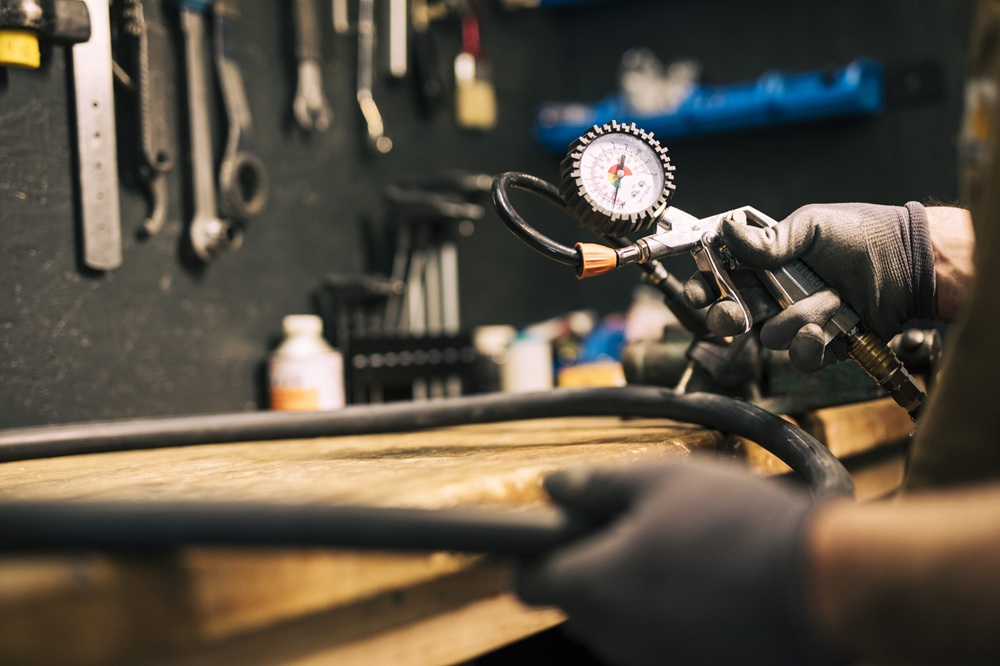
Compressed air tanks are of key importance for ensuring operational stability and the effectiveness and efficiency of production and service processes. Learn about the advantages of using tank-mounted compressors and check if they will work in your company.
What are the advantages of using tank-mounted compressors?
Air compressors equipped with a pressure tank have many advantages that make them a popular choice in many industrial and service applications. Therefore, they are successfully used by both large and medium-sized plants. The main advantages of tank compressors include pressure stabilization, elimination of pulsations, reduction of starting frequency, higher durability and protection against lack of access to the working medium in the event of a sudden failure. It is also worth adding that tank compressors are often mobile (they are mounted on wheels or trolleys), which allows them to be easily moved to workstations where they are needed at a given moment.
Let's examine these basic advantages of tank-mounted compressors. One of the basic ones is to ensure stable working pressure. The pressure tank, which is a reservoir that collects compressed air, acts as a buffer that ensures a stable output pressure. Moreover, the pressure tank prevents the pressure of the working medium from dropping even when the application requires increased compressed air. Why is this so important? For most pneumatic tools or devices powered by compressed air, the supply of a medium with constant pressure is crucial for proper and uniform operation.
The pressure tank also causes the compressor to turn on less frequently in order to maintain a certain pressure. The compressor can only turn on when the pressure in the tank drops below a certain minimum value. This causes the compressor to have fewer operating cycles, which has a direct impact on both electricity consumption and reduced wear of components, thus reducing the risk of failure. At the same time, the tank allows you to collect an amount of compressed air that allows you to handle larger loads or perform more operations without having to turn on the machine.
The use of a compressor on the tank has particular advantages in the case of piston compressors. Such a piston compressor on the tank reduces pulsations in the system. This is especially important for pneumatic tools that require constant compressed air.
The advantage of tank compressors is increased protection against machine failure and extended compressor life. On the one hand, the compressed air collected in the pressure tank will allow you to continue working with pneumatic tools for some time until the supply runs out and the failure is repaired. At the same time, the compressed air tank extends the life of the compressor. This is due to the fact that fewer work cycles result in lower wear of the machine's components, and thus extend their service life.
Compressors mounted on a tank are usually mobile. They have wheels or are mounted on trolleys, so they can be moved quite freely to the workstations where they are needed at a given moment. As a result, if a compressor on a tank is used in a plant for various tasks performed in parallel, then instead of several devices or 1 larger compressor, you can purchase 1 compressor on a tank, which can be moved freely.
Tank-mounted compressors - types
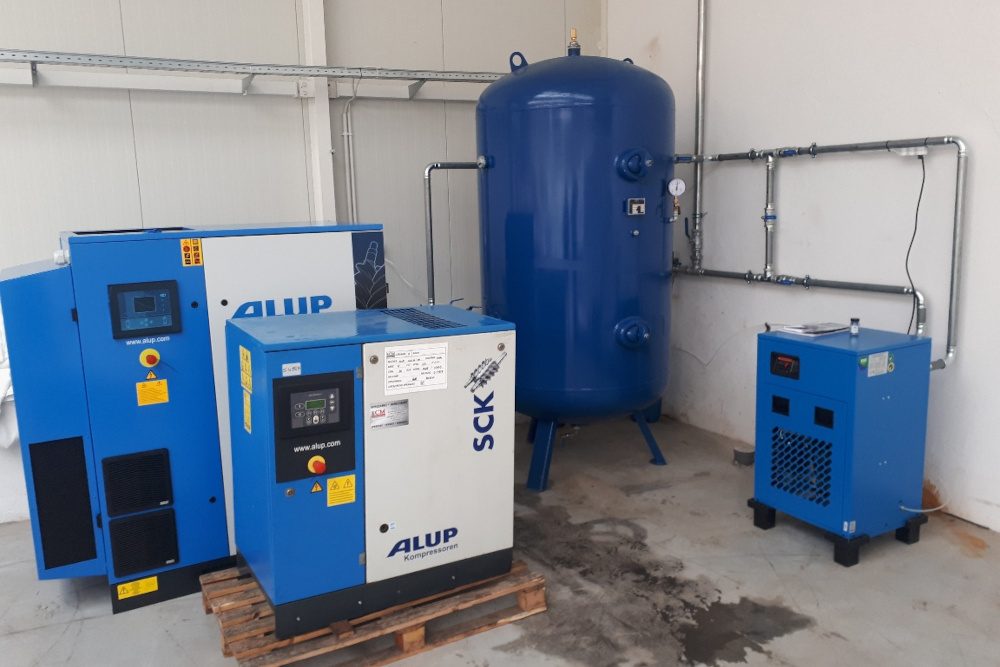
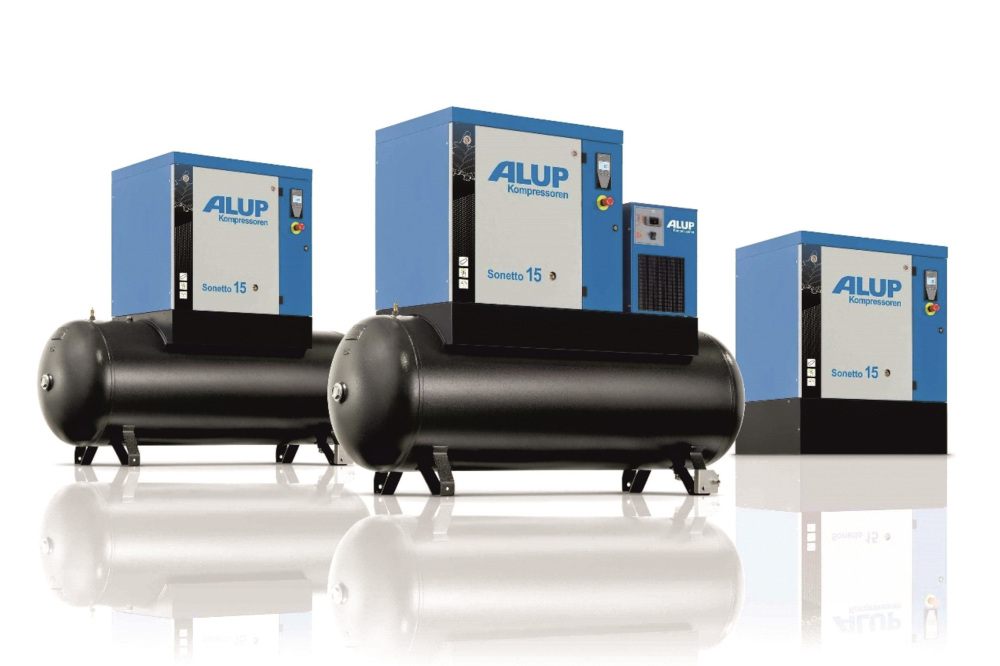
There are many types of tank compressors available on the market. Popular solutions are both piston compressors on a tank and screw compressors with a pressure tank. These machines provide a wide spectrum of power, pressure and efficiency. Their diversity makes them perfect for small and medium-sized production and service plants. Moreover, tank-mounted compressors offer a wide range of pressure tank capacities, making it easy to adapt such a device to the needs of a specific application.
It is worth adding that compressors on the tank are often also equipped with a compressed air treatment system, which ensures appropriate preparation of the working medium, also in terms of the expected cleanliness class. Often, the compressor tank also has an integrated air dryer (refrigeration dryer), which, in addition to properly selected filters, ensures the drying and cleaning of the working medium.